The Middle East conflict triggered by the Israeli and US attack on Iran February 28, 2026, may have wide-reaching and long-term impacts on energy deployment and use. Reactions have been multi-faceted in size and timing, but key trends run through them:
-
Local supplies of energy are receiving renewed focus
-
Energy security is now being prioritised over cost of supply
-
Emissions intensity remains the lowest priority, but where low-emission supplies are local and relatively competitive, they will be a lucky beneficiary of governments’ focus on energy security
HySights has engaged with governments, multinationals, local developers, and technology providers in the preparation of this report. Looking beyond kneejerk reactions, this report considers the impacts that have occurred over the past month.
Oil, gas, coal
Even within fossil fuels there is no single outcome to the conflict. Broadly, the conflict have had negative impacts on oil and gas, in both the short- and long-term, while for coal the impact will be to reinforce existing perspectives in Delhi and Beijing.
Tangible risk
For oil and gas, the risk of disruption to Straits of Hormuz has always present, but it has rarely received enough attention. Now that the strait has been blocked – save for Iran-origin crude to certain end-buyers – the effects of a shutoff of 20-25% of crude oil and LNG supplies are being felt.
Today’s impact is for oil prices ranging $100-170 per barrel, depending on the benchmark used. The highest pain is being felt by refiners and customers in APAC, where the Dubai benchmark is used, and pricing at $170 per barrel.
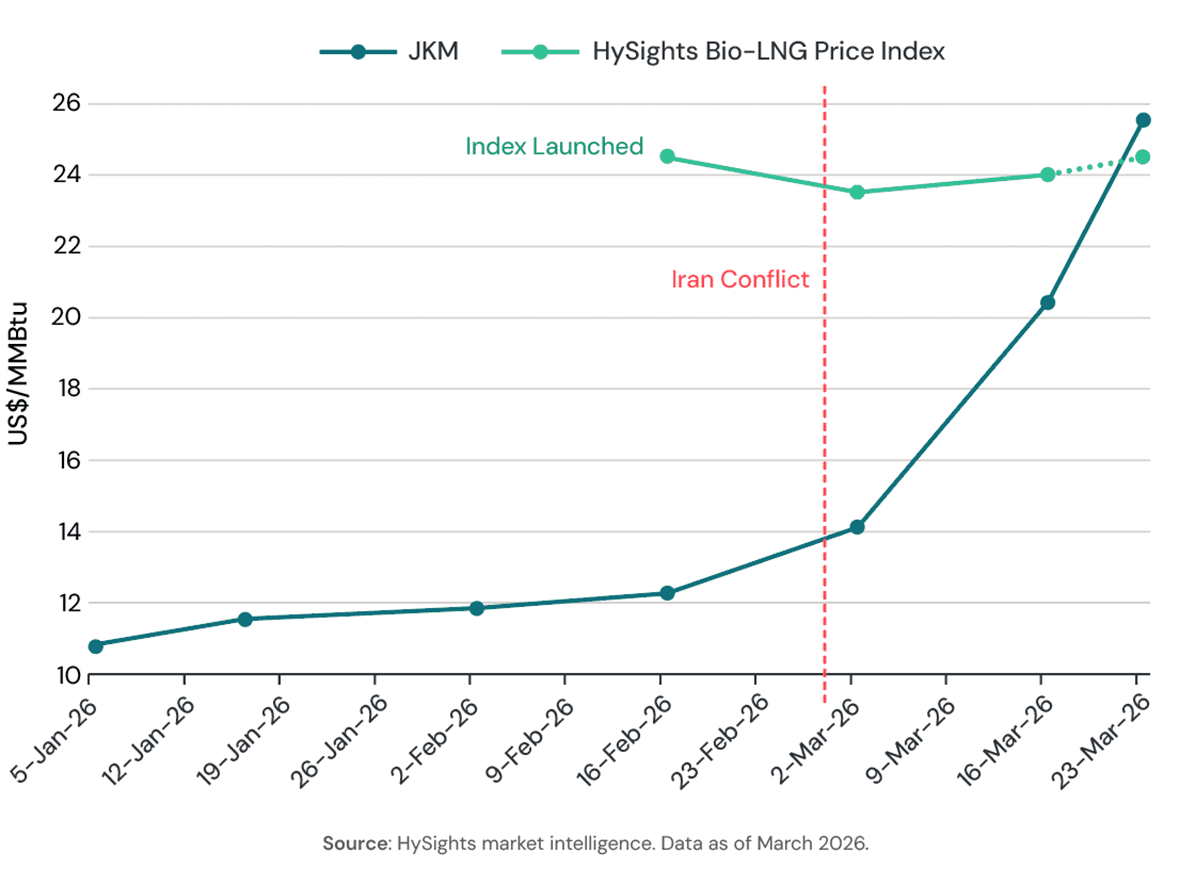
The impact on gas today is also severe. In import-heavy markets like Japan, South Korea, but especially for spot-exposed markets like Thailand and Europe, prices of $20-26/MMBtu bring back uneasy memories of 2022, when LNG prices averaged >$30/MMBtu for the year due to the Ukraine war and subsequent shutoff of Russia-Europe pipelines.
Infrastructure down, and out
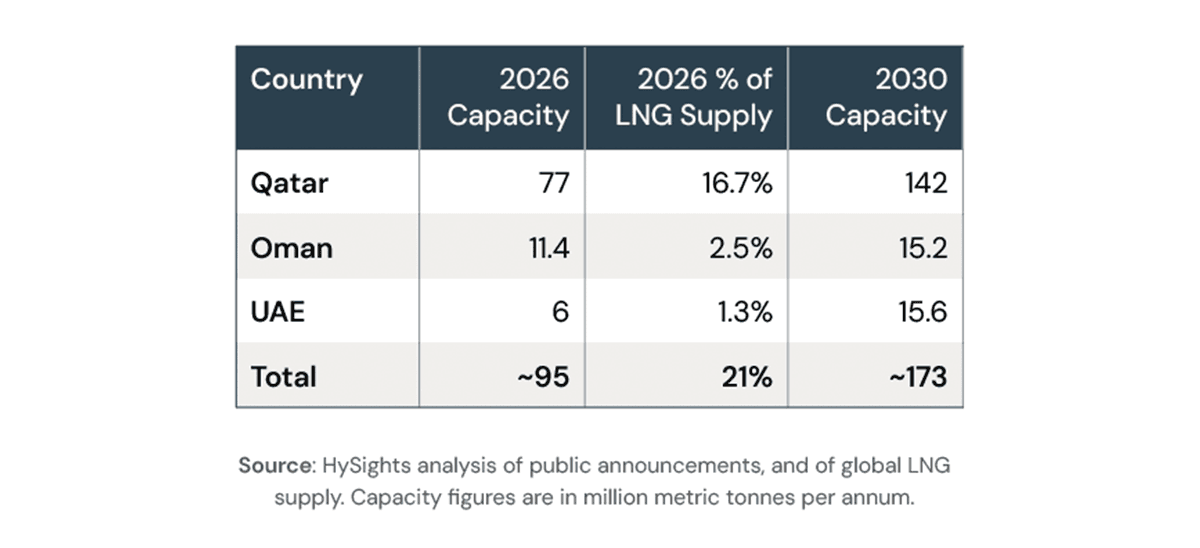
The actual impact on infrastructure is severe. Qatar Energy saw 12.8 million tonnes per annum (mtpa), or two of its large-scale LNG trains, severely damaged by a missile attack from Iran. This brings production to a stop for up to five years. Previously seen as the most reliable global LNG supplier, Qatar Energy has already shut down production and declared force majeure on the entire facility.
Iran’s gas flows by pipeline to Turkey have also been affected by attacks on the South Pars field, which will either force Turkey to curtail gas demand, or import LNG. This adds to fundamentals imbalance in LNG.
ADNOC issued a note March 23rd to customers saying it had reduced shipments from its existing Das Island plant (6 mtpa) due to risk of attack. Many of the oil streams from Middle East countries, such as Upper Zakum and Al-Shaheen, are unloadable, while other streams are operating at reduced capacity.
Market participants may be under-estimating the months needed to bring this production back online, even after hostilities fully cease and companies can move in to repair and recover infrastructure.
Prior HySights assessments of India and China domestic coal policies indicated that these two nations would keep coal as the baseload, domestic, supply secured source for power for decades. The past month’s gyrations in gas prices will reinforce that position.
Bottom line: Coal stands to benefit in India and China, while gas and oil importers will seek domestic or local alternatives.
Power
Beyond coal, other generating fuels for electricity are being impacted by the conflict. Some examples include:
-
Singapore’s GasCo seeking near-term LNG shipments to replace gaps due to Qatar’s outage [short-term]
-
Taiwan has announced in March 2026 bringing back online nuclear power plants from 2028 [long-term]
-
Pakistan is limiting gas-to-power usage by shortening school days and reducing commercial opening hours
Taiwan’s announcement is particularly notable, coming less than 12 months after it declared itself “nuclear-free”.
From HySights engagements with GenCos across the Asia-Pacific since February 28, all have reported difficulties bringing in sufficient gas supplies. Locations that are more spot exposed and have large gas fleets for baseload power generation need to reduce domestic consumption or find new supplies, or both. These include Thailand, Singapore, and Taiwan.
Countries with large coal fleets like Indonesia and Vietnam, which are supplemented with small volumes of gas imports, will see coal usage rise in the near-term at the expense of imported gas.
In terms of longer-term impacts, HySights expects solar and Battery Energy Storage Systems (BESS) solutions to benefit. In most ASEAN countries the cost to produce power from solar in combination with batteries is lower than all other power sources except for coal. Crucially, this power is produced domestically and does not rely on ongoing imports beyond the initial capital expenditure in clean tech. The main barriers to further solar + BESS deployment are planning idiosyncrasies and cost of capital.
Bottom line: Coal usage is likely to rise where possible. Over the longer-term, more domestic solar + BESS is expected to be deployed, along with renewable gas production (see below).
Industry
For users requiring industrial heat from natural gas or fuel oil, expect substitution with liquid biofuels available locally and purchases of renewable natural gas (RNG) or biomethane longer-term.
HySights has already observed increased domestic pricing for biomethane in ASEAN countries, in part due to the conflict. These contracts are long-term, fixed price. They are often above the domestic grey natural gas price, but give security on price and supplies.
One large-scale ASEAN industrial buyer of gas noted to HySights: “[Biomethane] prices are a bit higher than historical natural gas prices, but [biomethane offtake] works towards our emissions reduction goals, and they supply certain, local supply at a known rate.”
For countries exposed to coal imports for use in industry as well as power, expect increased imports of bio-coal, either as biomass pellets or torrefied pellets. One sogo shosha shared the following with HySights:
“The trend has been to substitute small industrial coal furnace use with biomass pellets; we expect this to speed up due to the conflict. Biomass pellets are available at competitive prices within ASEAN – the distance to Japan and barriers to delivery are much lower. Plus, there’s the emissions reduction factors.”
Electrification of industry represents another lever to reduce import dependency, although demand from other higher-paying sectors, such as digital infrastructure, in many locations are outbidding industrial users and undermining the case for electrification with its high capital costs.
Bottom line: In locations with local, competitive biomethane production potential, the exploitation of these resources is expected to accelerate. For large gas importing nations (Japan, South Korea, Singapore), import interest is likely to ramp up. Biomass for coal displacement will also gain more interest, given that it can be costcompetitive for import markets.
Liquid fuels
Access to refined oil products (liquid fuels like fuel oil, diesel, gasoline, and jet fuel) is starting to be limited in many countries. Three policy interventions stand out:
-
China has limited export quotas of refined oil products to preserve supplies
-
Japan’s Idemitsu Kosan, the country's second largest refinery, warned of shortages of road fuels like gasoline and diesel
-
Indonesia’s government has indicated it is bringing back to the table the B50 blend for diesel, which would increase biofuel content in diesel by 10%, to counter potential shortages
Crude and oil product stockpiles are running critically low in many nations, and clear impacts will be felt by airlines, shipping companies, and mobility sectors. One major dry bulk shipping company shared with HySights: “Every day is a struggle to find bunker fuel right now… all our time is spent seeking spot loadings.”
Benefits will be felt by existing biodiesel, ethanol, SAF, and HVO producers, given that these will be in higher demand and are at cost parity with today’s inflated fossil liquid fuel prices.
Today's high jet fuel prices, for instance, will likely benefit existing APAC SAF producers like EcoCeres, PETRONAS, and Neste. In the next months, their SAF sales could also gain in volume the next months as stock levels globally need time to recover, and Middle East oil infrastructure needs to come back online, before jet fuel prices can come down.
While this is a short-term impact, HySights expects long-term demand for domestically produced or regionally sourced green fuels to increase. Emissions reductions are a happy co-benefit; the energy security remains the crucial driver.
Bottom line: Greener fuel producers stand to benefit in the short-term (SAF, HVO) while long-term investment in local production of SAF, green methanol, bio-LNG to gain interest.
Trickle down
Crude oil prices have significant and wide-ranging downstream effects, even on seemingly unrelated products.
Beyond chemicals and refined oil products, which clearly have strong positive correlations with crude oil prices, the costs of agricultural products are expected to increase as well, with their use of diesel in production processes and fuel oil in marine transportation.
Natural gas is affected by oil because large volumes of gas use oil benchmarks as the underlying contract value. Similarly, grey hydrogen prices in many markets use Brent crude oil as an index.
Natural gas price rises will cause fertiliser (ammonia) prices to increase. Similarly, a fall in natural gas infrastructure in Qatar will have a major effect on helium supply – a key input in semi-conductor manufacturing and many other high-end industrial applications.
Bottom line: Realistically, this trickle down will cause significant inflation over and above liquid fuels and natural gas costs. An argument can be made for more low-emission hydrogen, ammonia, and methanol to be produced. HySights expects existing trends here to continue, such as in China and India where renewable hydrogen can be made at relatively competitive cost.
The present Middle East conflict represents a genuinely transformative moment: the world’s hydrocarbon breadbasket will have significantly lower production capacity of oil and gas for at least many months to come.
For the short-term, green fuels are competitive – if they are available, they will be favoured. In the long-term, HySights expects this moment to transform bioenergy-to-X and waste-to-X in many locations. For hydrogen-to-X, in lowest cost locations this could serve as an accelerant. Even a slightly higher price for these fuels is acceptable, provided they are available and reliable. The energy trilemma has tilted in favor of energy security, with cost taking a secondary position.
Learn more about HySights Ratings
To request a demo or HySights Ratings methodology, reach us at contact@hysights.com
Access market insights