
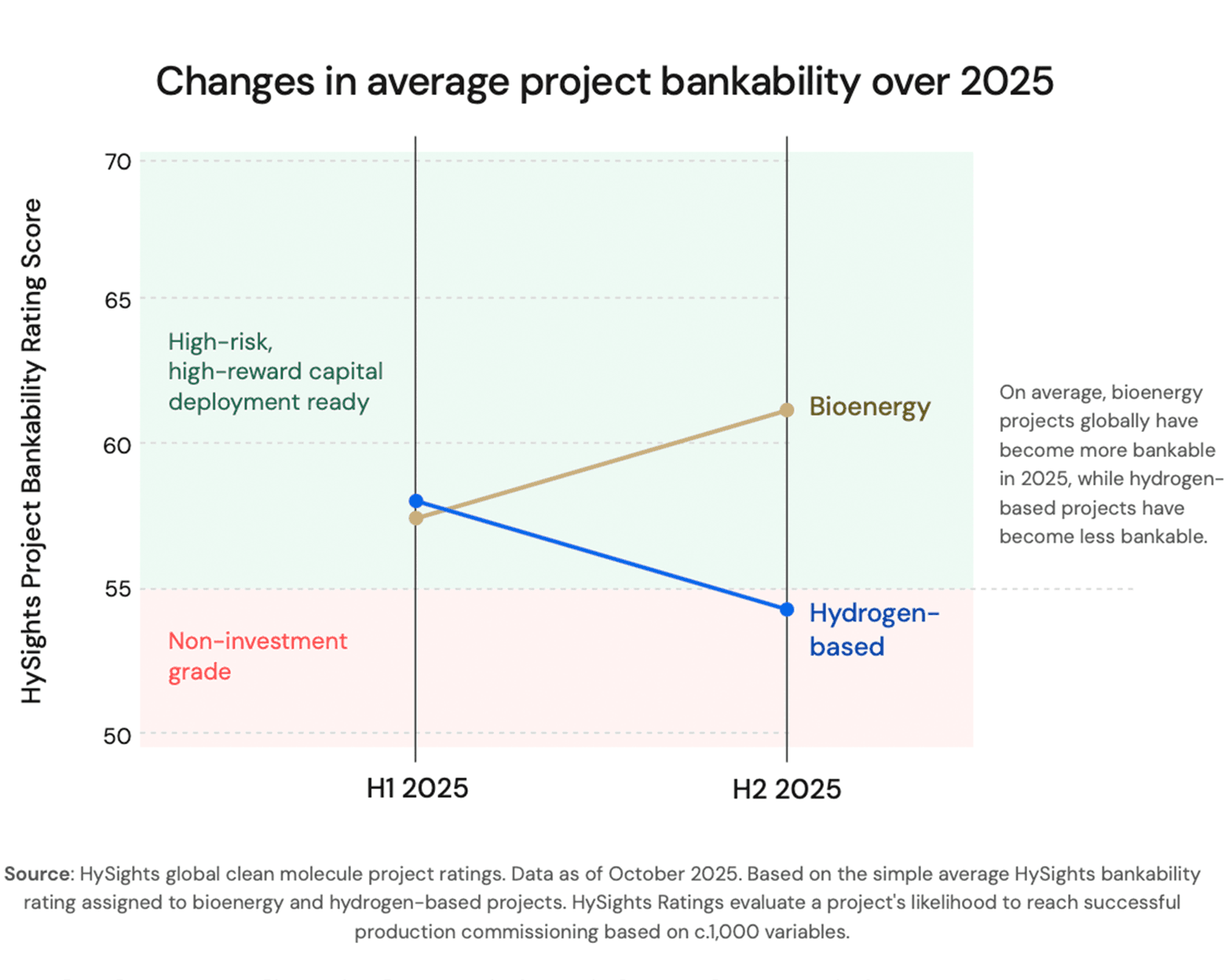
In January 2025, HySights identified five pivotal industrial decarbonisation themes, including a renewed and sustained focus on bioenergy over synthetic fuels for industrial decarbonisation (“Bio- Outmuscling E-”). Developments throughout 2025 have reinforced this view, with policy shifts, pricing, and demand signals across major markets increasingly in favour of bio-based alternatives.
This report analyses the drivers behind this shift and highlights the potential high-interest investment fields for 2026. Our next analysis will focus on the top asset management platforms in these fields.
2025: Policy and market signals turn toward bioenergy
United States
The Trump administration has markedly reduced support for domestic green hydrogen and offshore wind, including the cancellation of permits for several offshore wind projects under construction and the reported withdrawal of funding from all seven domestic hydrogen hubs. Conversely, bioenergy has seen policy focus that benefits overall demand and domestic feedstock suppliers:
-
Increased blending mandates under the Renewable Fuel Standard for 2026–2027, up 7–10% versus 2025 levels, particularly benefiting renewable diesel
-
Revised Renewable Identification Numbers (RINs) eligibility criteria to encourage use of domestic feedstock over imports
However, at the international level, U.S. lobbying efforts at the International Maritime Organization (IMO) to delay the Net Zero Framework (NZF) have dampened prospects for maritime biofuel adoption. This indicates a prioritisation of LNG over biofuels within the Trump administration’s energy merit order.
European Union
Several member states have reallocated support from hydrogen to bioenergy. In May 2025, Italy redirected €640 million ($745 million) of incentives destined originally for hydrogen to biomethane investment development.
At the EU level, in October a letter by European Commission (EC) President, Ursula von der Leyen, was released that signalled that "advanced biofuels" may count toward compliance targets in hard-to-abate sectors like transport – though duration parameters remain undefined, creating uncertainty for the long-term offtake agreements needed to make projects bankable.
The same letter hints the percentage of carbon tax exposure that can utilise voluntary credits generated elsewhere through carbon removals could be increased from 3%.
Asia-Pacific
Across the region, national-level shifts signal greater pragmatism toward scalable, near-term solutions:
Australia: Despite its position as one of the foremost backers of green hydrogen, the country's recent Cleaner Fuels Program, launched in September 2025 with A$1.1 billion ($720 million) in production incentives for ten years, supports both biofuels (including energy crop-based fuels) and e-fuels utilising renewable hydrogen. This is a notable pivot toward a more technology-neutral approach, and one that could benefit Sustainable Aviation Fuel (SAF) producers.
Japan: The three major GasCos have evolved their supply decarbonisation strategy. Where e-methane was previously the sole focus, biomethane via Liquefied Biomethane (LBM) shipments now holds equal footing. The 2030 mandate requiring 1-5% of city gas from "e-methane and biomethane combined" represents a significant policy shift, with GasCo procurement departments now drafting specific tonnes per year import targets for LBM.
Singapore: The September 2025 launch of Singapore's Biomethane Sandbox, enabling the importation of 300 MW-equivalent of biomethane or LBM, represents the largest single biomethane procurement initiative to date.

2026 outlook: Investment focus areas
HySights expects three bioenergy project types to attract the most investor focus from both physical market stakeholders and private equity funds:
Pyrolysis
“Distributed Energy Resources” (DERs) continue to gain traction. DERs involve multiple smaller-scale generating assets leveraging local resources like biomass from single supply sources.
Investment interest for Biochar Carbon Dioxide Removal (CDR) credits is also expected to only increase with the inclusion of foreign-generated carbon removal credits in many major domestic carbon markets (e.g. Japan, Singapore, UK, EU).
Biochar currently accounts for over 30% of all CDR credit purchases and (crucially for integrity) over 70% of verified "tonnes delivered", or >700 KTPA of CDRs delivered.
When tailwinds exist, the “three-in-one” model of pyrolysis plants can be attractive. Their ability to produce syngas for power, bio-oil for industrial heating, and biochar as a substitute for ammonia-based fertilisers or oil-based building materials offers diversified revenue potential—particularly where projects have offtake channels and marketing experience in place.
Biomethane and LBM
Although the IMO’s one-year delay of the NZF tempers short-term demand, biomethane and LBM remain among the few economically viable solutions for decarbonising shipping, baseload generation, and industrial heat.
And while shipping companies’ willingness-to-pay may stabilise around the low-$20s/MMBtu (below the $30/MMBtu mark possible with the NZF in place from 2028), major consumers of power such as Data Centers (DCs) and hyperscalers continue to seek ways to decarbonise their increasingly gas-focused energy supply portfolios.
Even for sectors outside of digital infrastructure, biomethane and LBM remain attractive options for decarbonising industrial heating. Additionally, companies looking to start the process of decarbonisation can leverage existing infrastructure to average in these fuels into their gas mix - a compelling pathway to emissions reduction without major capital overhauls.
SAF
With aviation continuing to depend on SAF as its only viable decarbonisation route, the choice of pathway becomes the critical question.
While the present dominant pathway – Hydrotreated Esters and Fatty Acids (HEFA)-based SAF plants – experienced a reprieve late-2025 after a difficult period earlier in the year, the feedstock availability versus demand equation is unappealing in the medium term. As such, HySights expects multiple pathways to emerge more strongly in 2026.
Smart money will link a strong understanding of regulation and its likelihood of changing prior to enactment, the strengths of a project’s location, the pathways' eligibility for certificates, and its breakeven. Assuming SAF follows the same trend as other industrial decarbonisation fuels – where price becomes increasingly important relative to emissions reductions – any plant able to significantly beat a $2,000/metric tonne breakeven could become an investment consideration.
Other investment areas
Other areas where HySights expects high investment interest include:
- Geologic hydrogen with primarily venture capital interest
- Decarbonised metallics such as hot-briquetted iron (HBI) or direct-reduced iron (DRI), given how the decarbonisation of steelmaking remains an issue with few alternatives
Investments in hydrogen-based pathways will likely include e-SAF, metallics, and have a regional focus in China and India.
Investment landscape evolution
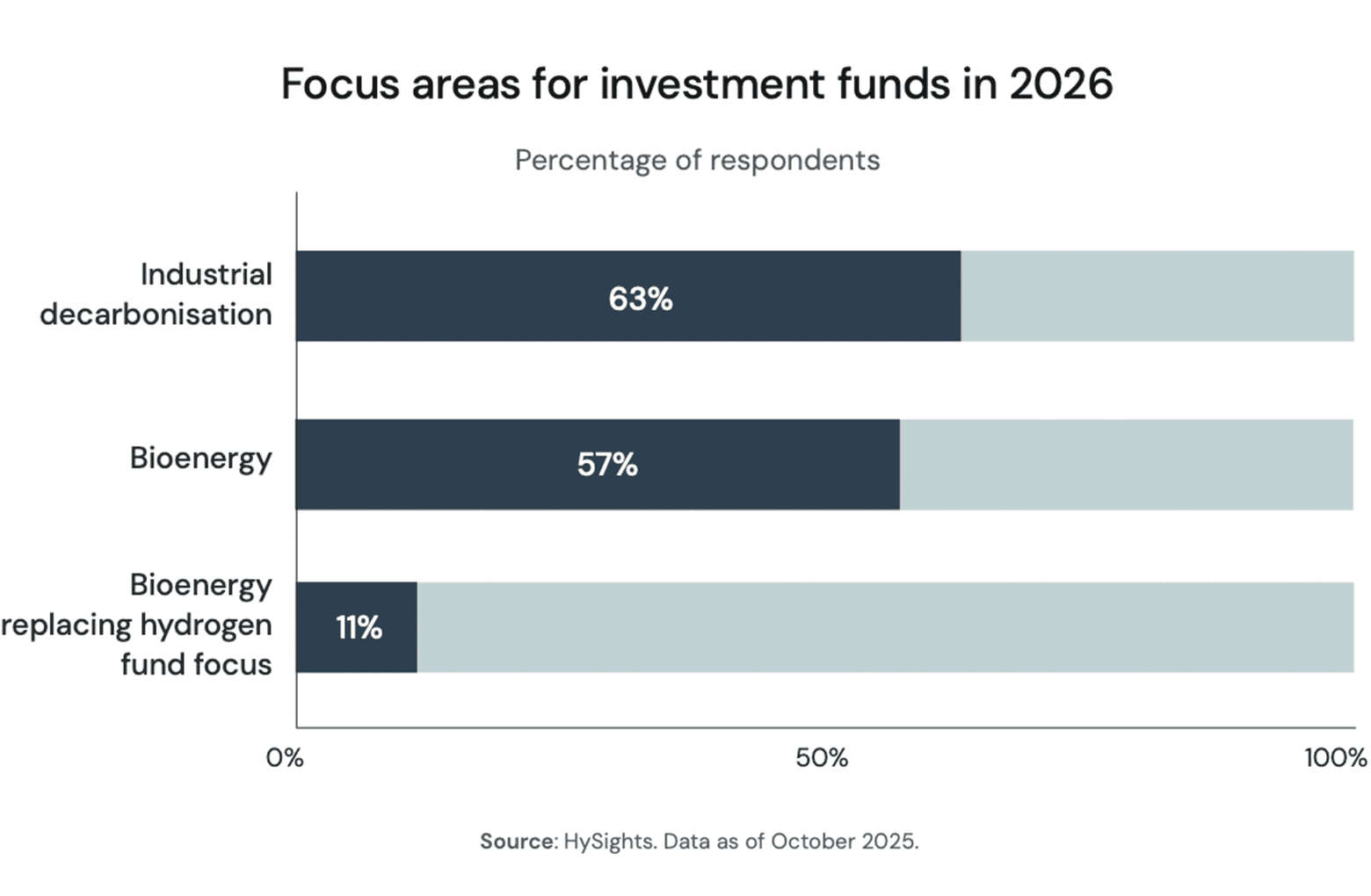
Investment funds are increasing their focus on industrial decarbonisation. While solar, batteries, and the electrification of mobility continue to command investment appetite, there is growing recognition that hard-to-electrify sectors must be considered when building funds to deploy in the second half of the decade.
Private equity funds are taking a targeted geographic and sectoral approach to establish investment potential:
- Europe-headquartered private equity is increasingly focused on Latin America and ASEAN bioenergy opportunities
- Asia-Pacific funds are looking at the multifaceted feedstock potential from palm oil mills
- Greater China funds are aware of considerable upside potential from domestic e-fuel plants given the latest five-year plan.
Learn more about HySights Ratings
To request a demo or HySights Ratings methodology, reach us at contact@hysights.com
Access market insights